What defines a good working environment?
As a project manager, you work with people. A large part of a project’s success depends on how project participants collaborate and on the level of wellbeing, motivation and engagement within the project team.
Wellbeing and the PERMA model
Positive psychology focuses on five key areas (among others defined by Martin Seligman). These five areas are brought together in the PERMA model:
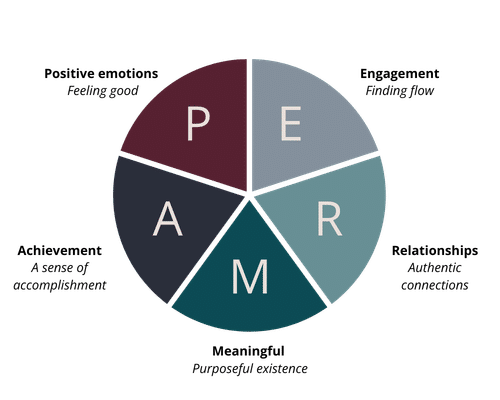
- Positive emotions – understood as short‑term states such as happiness, satisfaction, enjoyment and a sense of safety.
- Engagement – the ability to immerse oneself, become absorbed in and feel passionate about one’s work or the situation one is in, and to make active use of one’s personal strengths.
- Relationships – positive relationships with other people, including the ability to spread joy and build strong connections, while also being open to and inspired by others’ positive ways of being.
- Meaning – particularly meaning experienced through participation in positive communities. This may involve being part of something larger than oneself – at work, through charitable causes, or by helping others when one has the capacity to do so.
- Accomplishment – the tangible results one achieves at work or in one’s personal life.
Positive psychology is therefore based on the understanding that these five areas are central to our wellbeing, happiness and motivation – both in private life and in the workplace. According to positive psychology, it is ultimately the responsibility of the individual to enhance their own wellbeing and job satisfaction, and to take ownership of themselves. However, as a project manager, you can support this by creating strong and supportive conditions for project participants.

The project manager’s opportunities
Create a positive starting point for project status meetings, so they do not focus solely on challenges and problems. There should be ample space to reflect on the many positive results achieved along the way. One effective method is to include an agenda item such as “The three best things since the last meeting” and invite the group to share positive stories. This helps strengthen relationships and collaboration within the team, fosters positive emotions, and highlights (your shared) accomplishments.
In projects facing headwinds, where problems tend to pile up, it can be difficult to identify positive aspects. However, experience shows that even small wins can create joy and significantly strengthen the sense of cohesion and engagement.
- Do your best to spread joy and positive energy: This can be as simple as genuinely saying “good morning” to all project participants – and being present when you do so, for example by asking about their family or things you know matter to them. This promotes strong relationships and has a positive impact on both them and you.
- Put the project’s objectives into a broader perspective: Ensure that the project team understands how the project’s objectives connect to the organisation’s overall goals and strategy. It is equally important that participants have a clear sense of how the project will impact colleagues across the organisation. When people understand the role their project plays, the work feels more meaningful – and they may even contribute valuable ideas on how the project can deliver even greater value to the organisation.
- Help wherever you can: One of the project manager’s key responsibilities is to remove obstacles for project participants. Try to be proactive and engage in open dialogue with the team about potential risks and obstacles they see on the horizon. Consider making this a recurring agenda item at status meetings, functioning as an ongoing risk assessment, so you can address issues before they develop into real problems.
- Support strong performance: Project participants differ in how much structure and support they need in order to perform at their best – and enjoy doing so. Some may be highly self‑driven, while others benefit from more sparring, clearer goals, or simply more frequent check‑ins. In short: know your project participants and tailor your leadership to their personalities, competencies and individual characteristics. You may also consider using personality or strengths assessments (see our article on Strengths‑based project management) as a foundation for team building and for leading both individuals and the team as a whole.
- Celebrate your successes: This cannot be said often enough: it is important to use project milestones and deliverables as opportunities to create positive emotions, strengthen relationships and highlight achievements. Celebrations do not have to be elaborate – it might be an ice cream in the sunshine, a café visit, or perhaps finishing an hour early on a Friday. At the very least, a pastry and a big “cheers” at the status meeting.
Key takeaways
Your leadership should support project participants in opening up, developing and gaining new insights, helping to prevent bullying, low wellbeing, conflict, stress and poor performance. When this is achieved, project participants are more likely to thrive and deliver strong results.
Remember that your behaviour often sets the tone for the rest of the project team. Your actions can trigger a ripple effect that benefits both your own and the project team’s job satisfaction – and ultimately improves the project’s outcomes.
Want to know more?